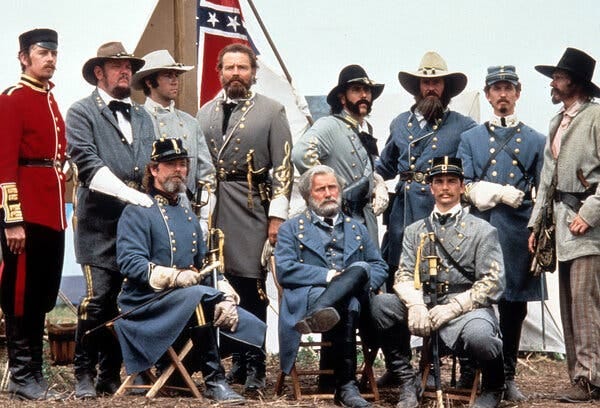
GETTYSBURG (1993) Travis’ Rating: 5/5
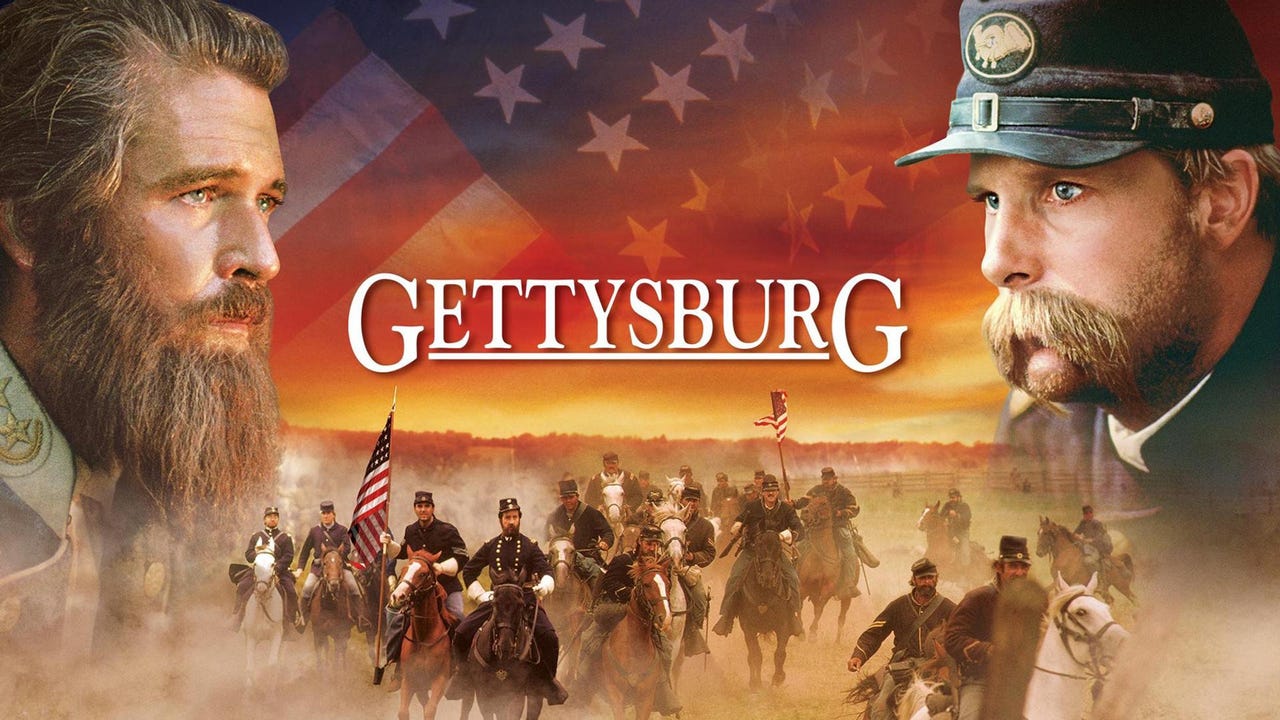
WHAT MAKES AN EPIC?
The term epic, let’s face it, has lost much of its meaning. We utilize the term referring to anything from a beautiful mountain view to a beautiful mountain of nachos. These two things can evoke a certain type of emotion, but they are without argument categorically different.
So, when we call a film ‘epic’ we might mean several different things. I believe Gettysburg is an actual EPIC in the American vein. Cultures have had their epics throughout history such as The Odyssey, The Epic of Gilgamesh, Paradise Lost, and War and Peace and arguably American media has already had many epics I would say categorically Ron Maxwell’s excellent civil war drama fits in the list of American epics.
The story is incredible in length, scope and detail. It encapsulates some of the most important themes and struggles of the United States of America and it has many heroic central characters. This makes the story truly EPIC. Of all the pieces making the film great, the heroic characters truly put this film a step above many other war movies.
THE PRIDE OF LEE
The first notable performance is Martin Sheen as General Robert E. Lee. This is no easy role to fill. Lee is well known as one of the greatest generals to fight in an American military. His prowess as a strategist and inspiration for his troops is darkened significantly by his allegiances to the confederacy and the cause of keeping slavery. This role could be taken in many directions, and a lesser actor would have probably picked the easy villain route, but Sheen doesn’t back down from the challenge of humanizing such an infamous figure in American history.
There are many small moments of kindness, decorum, and respect that come from Lee in his meetings with his subordinates. Sheen exudes the air of the southern gentleman Lee was famous for displaying. He is a ‘heroic’ figure in his own right despite not being a hero of the conflict. One of the most impactful parts of the film is how emotionally heavy it feels to know these men we can see acting with such dignity are fighting on a side that does not want to recognize the inherent dignity in all men.
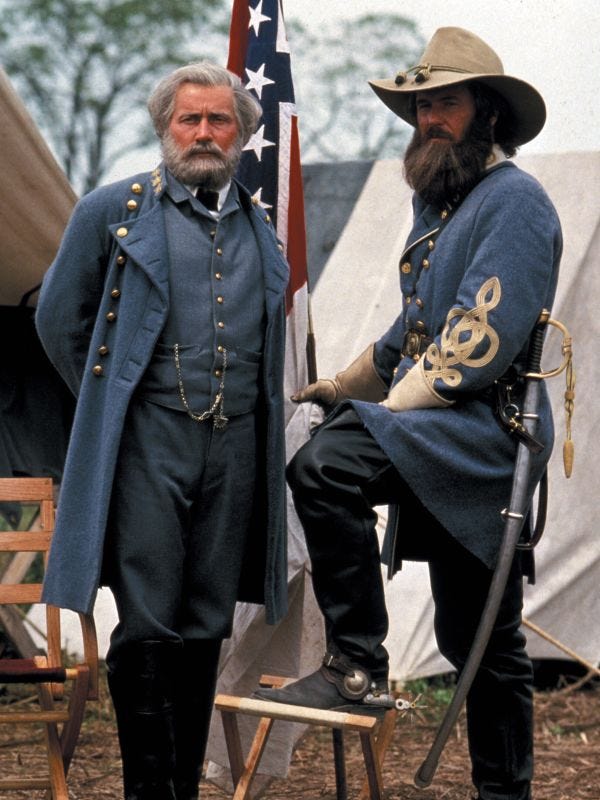
Lee’s darker side comes out in his conflicts with General Longstreet. Longstreet is rightfully cautious about the Gettysburg conflict. He wants the war over, he wants his men home, he has lost some of his passion for any type of cause that might have begun the conflict. Longstreet argues with Lee that a more patient approach would win the day, but Lee is determined he can win the war in one final battle. Sheen lets the small signs of pride creep into the face of Lee in all of these meetings and by the end of the film the audience knows this famous general is going to send thousands of his men into a suicide march. The crack in the perfect facade is shown with brutal and impactful honesty and Martin Sheen performs it brilliantly.
THE BROTHERHOOD OF ARMISTEAD AND HANCOCK
The relationship in this film that encapsulates the horror and sorrow of the American Civil War is that of Generals Armistead and Hancock. Hancock is the Major General of the Union Army; Armistead is the Brigadier General of the Confederate Army, and both came from the same community, same school, same world.
The film focuses less on Hancock but gives the audience many conversations between Longstreet and Armistead in which Armistead grows increasingly more anxious about meeting his life-long friend on the battlefield. Actor Richard Jordan (playing Armistead) brings a tear to the eye with his delivery of poetic lines that encapsulate how horrifying it must have actually been to meet a brother on the other side of a musket.
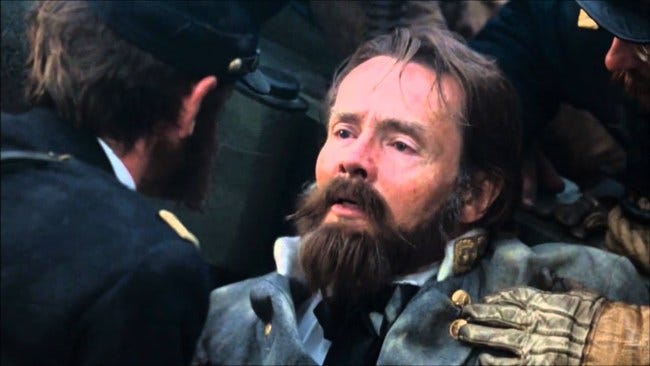
As the final battle builds, we want these two not to meet, but we know it cannot be avoided. Hancock will command his army, Armistead will lead his troops, and both will have to have the intent of killing the other. This tragic tale is difficult but compelling to watch and shows the bonds of brotherhood even in the worst of situations.
THE ZEAL OF PICKETT
One of the shorter storylines that is still emotionally powerful is that of Confederate General George Pickett. Another brilliant performance brings the viewer into the passion of a fighting man always ready to charge headfirst into the fray. Stephen Lang as Pickett exudes a fighting energy worthy of rousing any zealous soldier.
Pickett’s story begins with positive motivational power (though yes, he is on the wrong sides) and ends with the consequence of overzealous fighting passion. One of the most heartbreaking lines comes at the end of the film after the confederate’s final charge.
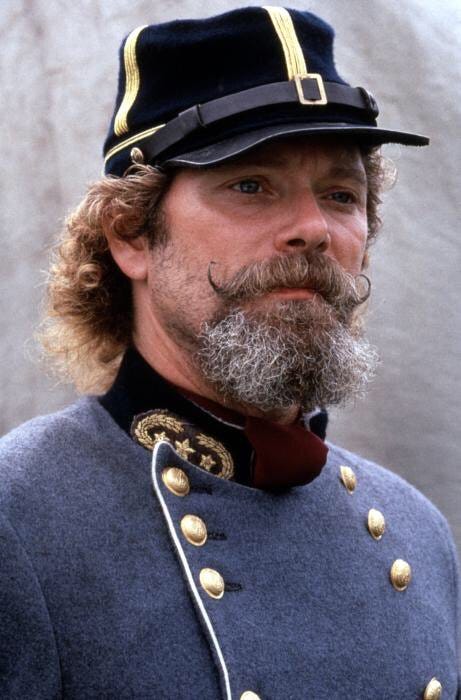
Lee, trying to find some level of hope in the disastrous defeat, looks down from his horse at a shocked Pickett and says “General, you must regroup your division.” Pickett, looking up with him as if still not understanding the reality of the situation, replies “Sir, I have no more division.”
Pickett was the most eager to charge into the fray and in the end he loses all his men.
THE DUTY OF LONGSTREET
The most screentime in Gettysburg belongs to Tom Berenger’s incredible performance as General James Longstreet. Longstreet is a contender for the true ‘tragic hero’ of this story. He is a confederate general suffering in the tired silence of lost purpose. He knows only his profession as a soldier now but has lost a clear reason as to why he is soldiering. As Berenger moves amongst his ranks, gives out orders he personally sees as faulty, and clashes with General Lee over strategy, we see the real effects of the war on American citizens turned soldiers.
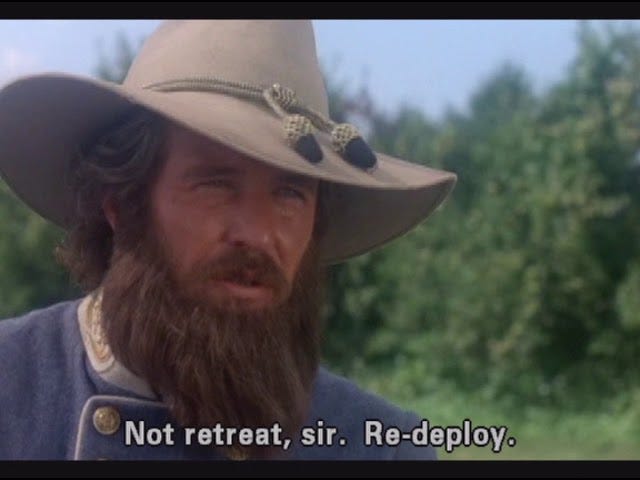
Berenger is the tall, imposing, confident, yet stoic leader of men who finds himself on the wrong side of a losing battle. He is so tied to his duty for his state and his men that he refuses to leave the conflict even amongst his own loss of confidence. This tragically leads him to giving orders he knows are wrong to men he knows will die.
The one downside of Berenger’s turn as Longstreet is his absolutely horrendous fake beard.
FINALLY, THE COURAGE OF CHAMBERLAIN
Jeff Daniels is one of the greatest American actors to ever do the job. In 1993 he played this moving role of General Joshua Lawrence Chamberlain, the professor turned army leader who held Little Round Top against an unceasing charge of confederate soldiers. The next year, 1994, Daniels would play Harry in Dumb and Dumber. Yeah, he’s that good.
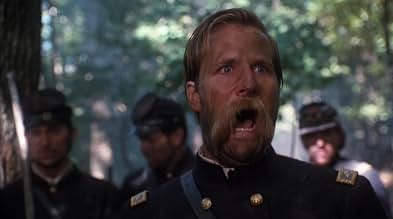
Daniel’s performance as Chamberlain may not has as much screen time as Berenger’s, but I think he fully deserves the top billing as this stories’ epic hero. Chamberlain is everything America looks for in a hero. He is the soft-spoken middle-class man who steps up and faces impossible odds when the times call for bravery.
Daniels doesn’t just deliver a quiet nuanced performance of a truly virtuous leader of soldiers he delivers one of the best motivational speeches I have ever seen in a war film. I highly suggest you look up Chamberlain’s speech to the dissenting soldiers from Maine.
FINAL THOUGHTS
Gettysburg is a true epic: a long tale of large scope following tragic heroes in an event that encapsulates the struggles of American history. The characters make the film, and the performances do not fail on any level. I highly recommend carving out 4.5 hours to watch the extended edition of Gettysburg.